

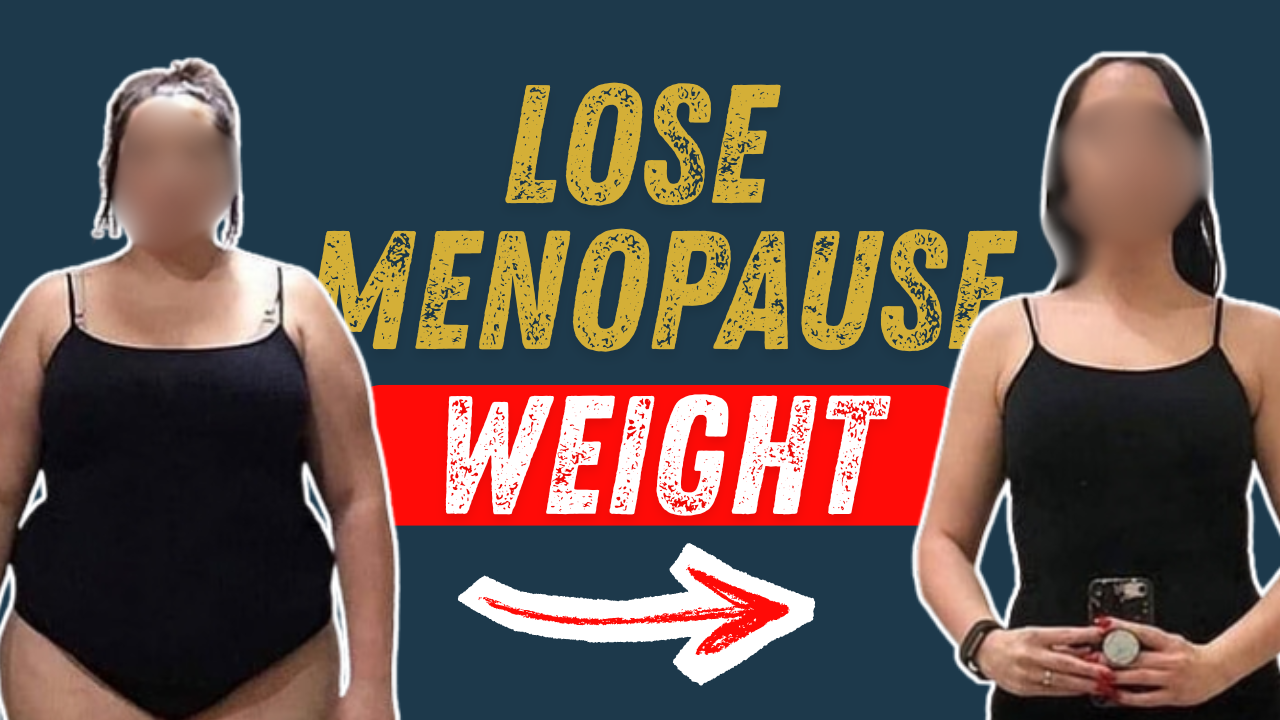
WATCH VIDEO BELOW
Menopause Weight Loss: How to Finally Lose Weight Without Fighting Your Body
Menopause weight loss has become one of the most requested topics from our Fit Over 40 community, and for good reason.
So many women (and men navigating midlife changes) tell us the same thing:
- “I’m doing everything right, but nothing is working.”
- “The belly fat won’t budge.”
- “My energy is lower than ever.”
If that sounds familiar, here’s the truth:
Menopause weight loss is not just about willpower or discipline.
It’s about biology.
Menopause is a natural transition that changes how your body stores fat, builds muscle, and uses energy. Research, including studies from the Mayo Clinic, shows that menopause shifts fat storage toward the abdomen and increases metabolic risk factors, independent of aging alone.
This means your old strategies may no longer work.
But that doesn’t mean you’re stuck.
Why Menopause Weight Loss Feels So Difficult
To understand menopause weight loss, you have to understand what’s actually changing inside your body.
Hormonal Shifts and Fat Storage
As estrogen declines, your body begins to store more fat around the abdomen, known as visceral fat.
This type of fat:
- Is more metabolically active
- It is linked to higher health risks
- Is more resistant to traditional dieting
This is not a lack of discipline. It’s a biological adaptation.
Muscle Loss and Slower Metabolism
Menopause also accelerates the loss of lean muscle mass.
This leads to:
- A slower resting metabolism
- Fewer calories are burned at rest
- Increased fat storage from the same food intake
Why “Eat Less, Move More” Stops Working
The combination of:
- Increased fat storage
- Decreased muscle mass
…is exactly why traditional dieting approaches fail during menopause.
In many cases, eating less and exercising more actually increases stress on the body, making menopause weight loss even harder.
What Actually Works for Menopause Weight Loss
Instead of fighting your body, the key is learning to work with it.
Here are the most effective, science-backed strategies.
1. Protein-First Nutrition
Why Protein Matters More Than Ever
Higher protein intake has been shown to:
- Preserve lean muscle mass
- Improve satiety (reduce hunger)
- Support better body composition
How to Apply It
Aim for:
- 25–30 grams of protein per meal
Great sources include:
- Eggs
- Fish
- Greek yogurt
- Lean meats
- Legumes
- High-quality protein shakes
Simple micro-win:
Add one extra serving of protein to your breakfast or lunch and notice how your hunger and energy shift.
2. Strength Training for Metabolism
The Role of Muscle in Menopause Weight Loss
Muscle is the engine of your metabolism.
Strength training helps:
- Maintain and rebuild muscle
- Increase metabolic rate
- Support bone density
How to Get Started
You don’t need long workouts.
Start with:
- 2–3 sessions per week
- Simple resistance exercises
- Optional tools like weighted vests during walks
Consistency matters more than intensity.
3. Fiber and Whole Foods
Why Fiber Becomes Critical
As hormones shift, appetite regulation changes.
A high-fiber diet helps:
- Stabilize blood sugar
- Increase fullness
- Reduce cravings
What to Focus On
Build meals around:
- Vegetables
- Whole grains
- Legumes
- Minimally processed foods
Simple micro-win:
Fill half your plate with plant-based foods at each meal.
4. Daily Movement (NEAT)
Beyond the Gym
Non-exercise activity thermogenesis (NEAT) plays a major role in menopause weightloss.
This includes:
- Walking
- Standing
- Daily movement throughout the day
Why It Works
Consistent movement:
- Supports fat loss
- Improves metabolic health
- Reduces visceral fat
Simple Starting Point
- Aim for 7,000–10,000 steps per day
- Add “movement snacks” throughout your day
5. Sleep and Stress Management
The Hidden Drivers of Weight Gain
Poor sleep and chronic stress increase cortisol levels.
This leads to:
- Increased hunger
- More belly fat storage
- Reduced metabolic efficiency
How to Improve Recovery
Start with:
- Consistent sleep schedule
- Limiting screens at night
- Calming routines like herbal tea or magnesium
The Missing Piece in Menopause Weight Loss
Everything above matters.
But there’s one principle that ties it all together.
Your Body Needs to Feel Safe
During menopause, your body is not just managing calories.
It’s assessing safety.
When hormones shift, your body becomes more protective. It holds onto energy unless it receives consistent signals that it’s safe to release it.
What Creates Metabolic Safety
Your body responds to:
- Consistent meal timing
- Stable nutrition
- Predictable movement
- Quality recovery
It does not respond well to:
- Extreme dieting
- Overtraining
- Irregular routines
- Chronic stress
A Real-World Example
One woman in our program was doing everything “right” on paper:
- Eating very little
- Exercising intensely
- Staying disciplined
But she wasn’t losing weight.
What we discovered was:
- Irregular meal timing
- Poor sleep patterns
- Hidden daily stress
Once we introduced:
- Protein-first meals
- Regular walking
- Consistent sleep routines
- Structured daily rhythms
Her body finally began to release weight, without increasing intensity.
That’s the power of metabolic safety.
Additional Hormonal Support for Menopause Weight Loss
To fully support your body during menopause, consider:
Key Health Factors to Check
- Thyroid function
- Vitamin D levels
These directly impact:
- Energy
- Metabolism
- Muscle function
Focus on Nutrient Density
Instead of strict calorie restriction:
- Eat smaller portions of higher-quality foods
- Prioritize nutrients over volume
Support Detox Pathways
Your liver and gut help regulate hormones.
Support them with:
- Cruciferous vegetables (broccoli, kale)
- Fiber-rich foods
- Herbal teas like dandelion or milk thistle
Let Go of This Limiting Belief
“It’s my hormones, I can’t lose weight.”
That belief is understandable, but it’s not true.
You can achieve menopause weight loss.
But not by starving yourself or pushing harder.
Instead, focus on:
- Protein
- Strength
- Movement
- Rhythm
- Recovery
- Consistency
Final Thoughts: A New Relationship with Your Body
Menopause is not the end of your metabolism.
It’s the beginning of a new relationship with your body.
One built on:
- Awareness
- Stability
- Trust
- Consistency


